
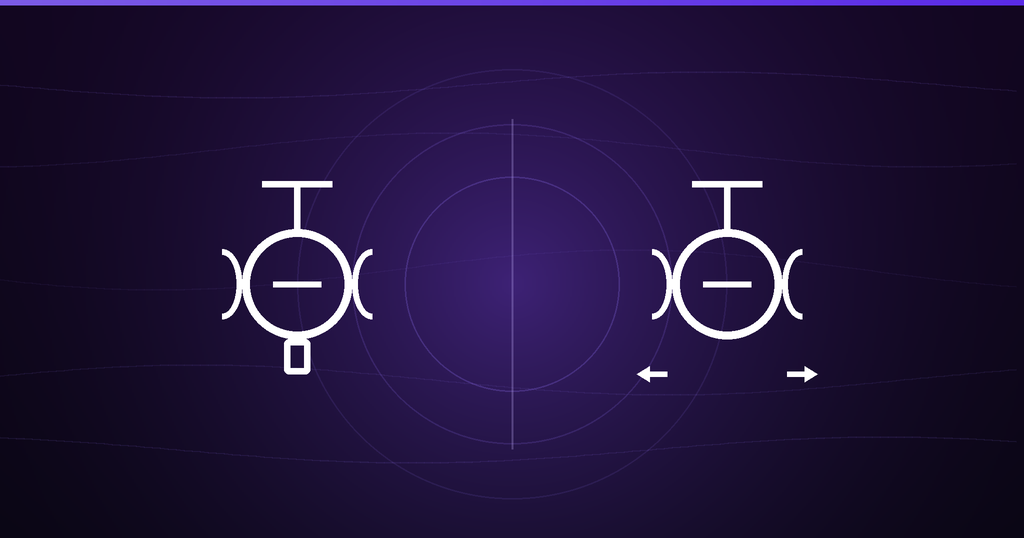
Ball valves dominate isolation duties across oil and gas, water infrastructure and general industry, but not all ball valves work the same way. The two fundamental designs, floating and trunnion-mounted, seal by different mechanisms, and choosing the wrong one for your line size and pressure class can mean high operating torque, accelerated seat wear or seal failure.
How a Floating Ball Valve Seals
In a floating design, the ball is held only by the stem and is free to move slightly along the pipe axis. When the valve closes, upstream line pressure pushes the ball against the downstream seat, and it is this pressure-energised contact that creates the seal. The higher the differential pressure, the harder the ball is forced into the seat.
This simplicity is the floating valve’s great strength. With fewer components, floating ball valves are compact, economical and easy to maintain, which is why they are the default choice for smaller bores, typically DN50 (2″) and below in higher pressure classes, or up to DN150 (6″) in lower ones. Three-piece and two-piece forged steel floating valves rated to 3000 WOG are workhorses in process plants, fuel systems and instrument lines.
The limitation appears as size and pressure increase. Because the entire sealing load transfers through the ball into the downstream seat, large high-pressure valves develop enormous seat loading. Operating torque climbs steeply, soft seats deform, and the valve becomes impractical to operate and maintain.
How a Trunnion-Mounted Ball Valve Seals
A trunnion-mounted valve fixes the ball in place with support shafts (trunnions) above and below. The ball cannot float; instead, spring-loaded, pressure-assisted seat rings move against the stationary ball to seal. Line pressure acts on the seat pistons rather than the whole ball face, so seat loading stays manageable regardless of valve size.
The practical benefits follow directly. Operating torque is far lower for the same size and class, which means smaller actuators and gearboxes. Seat wear is reduced and predictable. And because each seat seals independently, most trunnion valves provide double block and bleed (DBB) capability, you can isolate both sides of the ball and vent the body cavity to verify the seal, a requirement in many pipeline and oilfield applications. Self-relieving seat designs also protect against dangerous cavity over-pressure caused by trapped, thermally expanding fluid.
Choosing Between Them
As a rule of thumb, floating valves suit smaller sizes and moderate pressures where economy matters; trunnion-mounted valves are the standard for large-bore, high-pressure and critical isolation duties. Specify trunnion-mounted when the line is DN200 (8″) or larger, when the class is 600 and above (and commonly from Class 300 at mid sizes), when DBB or cavity relief is required, or when actuation torque must be minimised. API 6D pipeline valves and API 6A wellhead valves are overwhelmingly trunnion-mounted for exactly these reasons.
Floating valves remain the sensible choice for utility services, smaller process lines, threaded and socket-weld installations, and anywhere a compact, cost-effective quarter-turn isolation valve is needed.
Talk to Purple Valves
Purple Valves supplies both designs across a full range of sizes, pressure classes, body materials and end connections, from three-piece forged steel floating valves to fully welded trunnion-mounted pipeline ball valves. If you are unsure which design fits your service conditions, our team can help you match the valve to the application. Contact us or browse our product range.
Alex Ocean
Why Choose Us
Australian-owned pipeline valve specialists: engineer-led, responsive, and ready when other suppliers let you down.
Australian owned and operated
Purple Engineering is an Australian company, so your project is managed locally by people who know Australian standards and conditions.
Reliable global brands
As the Australian distributor for trusted global manufacturers, every valve we supply is vetted for quality and consistency.
Engineer-led service
Founded and run by engineers who understand your project, not a phone operator who is just good at taking messages.
Fast when it counts
When everything is going wrong, we move quickly to get the right parts to you and minimise your downtime.